
Heart Care at Sanger Heart & Vascular Institute
Whether you have a heart rhythm condition, vascular disease or coronary artery disease, we’re here for you with advanced, customized and complete cardiovascular care.
At Atrium Health Sanger Heart & Vascular Institute, we provide the region’s top-ranked heart care and perform in the top 10% nationally for advanced procedures according to U.S. News & World Report.
With innovative research and clinical trials, surgical firsts, breakthrough treatments only found here and leading outcomes, we provide the highest-quality care to give you the best chance of an excellent outcome.
Cardiovascular services, subspecialties and centers
- Adult congenital heart disease
- Advanced heart failure, transplant and mechanical circulatory support
- Aneurysm and aortic disease
- Electrophysiology and Arrhythmia Care
- Cardiovascular imaging
- Cardio-oncology
- Cardiovascular surgery
- Coronary artery disease pulmonary hypertension
- The Gragg Center for Cardiovascular Performance
- Pediatric cardiology
- Structural and valvular heart disease
- Thoracic surgery
- Vascular disease
- Center for Women’s Cardiovascular Health
- Hypertrophic Cardiomyopathy Center of Excellence
Is your heart healthy?
Complete a short heart health assessment to find out if you are at increased risk of developing heart problems.
Why choose Sanger?
We’re the only cardiovascular provider in the region:
- With a trauma center, ensuring we’re prepared to address sudden, life-threatening situations alongside your heart condition
- Offering left ventricular assist device (LVAD) and transplant treatment options
- Recognized as high performing in all 6 common heart conditions and procedures evaluated by U.S. News & World Report
We’re the region’s:
- Top-ranked heart provider by U.S. News & World Report
- Highest-volume center for thoracic endovascular aortic repair (TEVAR) and endovascular abdominal aortic aneurysm repair (EVAR)
Additionally, we:
- Care for more heart patients than any other provider in the region
- Have a better nurse-to-patient ratio when compared to other regional cardiovascular providers, proven to lead to better outcomes and patient experiences
- Offer the most advanced technologies among all cardiovascular centers in the region
- Perform a greater number of transcatheter aortic valve replacement (TAVR) procedures than any other provider in the region
The region’s best heart care
At Sanger Heart & Vascular Institute, our care has repeatedly earned national recognition.
According to U.S. News & World Report, Sanger is the region’s top-ranked heart and cardiovascular program. And we’re the only hospital in the region to be recognized as high performing in 5 common heart conditions and procedures evaluated by U.S. News – the highest rating awarded for these areas of care:
Additional awards and recognition
Sanger Heart & Vascular Institute is continually recognized, locally and nationally, for our commitment to delivering efficient, quality care. Year after year, we receive awards and distinctions from many of the top accrediting and ranking organizations in the industry.
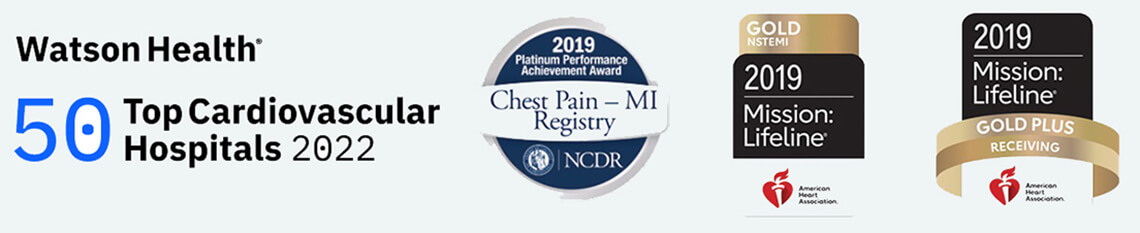
Atrium Health Pineville and Atrium Health Carolinas Medical Center have been named 2 of the nation’s top-performing cardiovascular hospitals by Fortune and IBM Watson Health. This award recognizes achievements in lower readmission rates, shorter lengths of stay and fewer complications. This is the fourth year in a row that Atrium Health’s cardiovascular teams have been recognized with this honor.
The American College of Cardiology’s NCDR Chest Pain – MI Registry Platinum Performance Achievement AwardSanger Heart & Vascular Institute received the American College of Cardiology’s NCDR Chest Pain &ndash MI Registry Platinum Performance Achievement Award at 3 of our locations: Charlotte, Cabarrus and Pineville. We’ve received this award 11 years in a row, and we’re 1 of only 225 hospitals nationwide to receive this honor. The award recognizes our commitment and success in implementing a higher standard of care for heart attack patients.
The American Heart Association’s Mission: Lifeline STEMI RecognitionSanger Heart & Vascular Institute received the Mission: Lifeline® STEMI Gold Plus, the highest possible Quality Achievement Award for implementing specific quality improvement measures outlined by the American Heart Association for the treatment of patients who suffer severe heart attacks.
The American Heart Association’s Mission: Lifeline NSTEMI RecognitionSanger Heart & Vascular Institute received the Mission: Lifeline® NSTEMI Gold, the highest possible Quality Achievement Award for implementing specific quality improvement measures outlined by the American Heart Association for the treatment of patients who suffer heart attacks.
The Society of Thoracic Surgeons (STS) 3-Star Rating AwardAtrium Health Pineville has earned a distinguished three-star rating – the highest possible designation – from The Society of Thoracic Surgeons (STS) for its patient care and outcomes in coronary artery bypass grafting (CABG) procedures. The rating places Atrium Health Pineville’s heart bypass surgery program in the top 20% of programs in the United States and Canada.
Sanger Heart & Vascular Institute
2022 Outcomes and Innovation
Request an appointment with a cardiologist or other heart specialist.
Heart disease prevention
When you take charge of the factors influencing your heart health, you can lower the risk of heart disease and, if it’s already a concern, prevent further complications. Learn how to better manage your condition, or call 704-512-5712 to make an appointment with a cardiologist.


Cardiology referrals
When you refer a patient to Sanger Heart & Vascular Institute, you play a critical role in their treatment plan. We keep you involved and up-to-date on your patients until they can be transitioned back to your care. To learn more about our leading outcomes and the advanced treatments available to your patients, visit our dedicated page for providers.
Contact us to make a referral for cardiovascular care: 877-999-7484
Our cardiologists and providers
With 230+ heart specialists on our expert team, we deliver the highest-quality heart and vascular care.